
EUR/US$ 1.1542
Cotton Posts Modest Strength on Thursday
Barchart: Cotton futures closed Thursday's session 12 to 24 points higher across the board. Crude oil rose $3.01 per barrel, with the US dollar index up $0.269. Export Sales data showed a net cancellation of 55,855 RB of 2025/26 cotton in the week of July 30 (the marketing year ended July 31), a marketing-year low, while new crop business totaled 242,052 RB, the third largest for the marketing year, led by Vietnam (132,400 RB) and Turkey (41,600 RB). Shipments totaled 222,830 RB, with Vietnam taking the bulk (88,900 RB), followed by Pakistan (35,500 RB) and Turkey (19,500 RB). The Seam reported 2,277 bales sold on August 5 at an average price of 80.64 cents. The Cotlook A Index fell 70 points on August 5 to 93.00 cents. ICE certified stocks held steady at 84,632 bales. The Adjusted World Price was raised 163 points Thursday to 66.29 cents/lb.
Source: Barchart
U.S. Export Sales — Week Ending July 30, 2026
USDA (Weekly Export Sales report): U.S. Upland cotton net sales for 2025/26 were reduced by 55,900 RB — a marketing-year low — down sharply from both the previous week and the prior 4-week average, as cancellations (mainly from Turkey, India, South Korea, Indonesia and Vietnam) outweighed new bookings. New crop (2026/27) sales, by contrast, were strong at 242,100 RB, led by Vietnam, Turkey, Honduras, India and Pakistan. Shipments of 222,800 RB were down 5% from the previous week and 7% from the prior 4-week average, led by Vietnam, Pakistan, Turkey, India and Bangladesh. For Pima cotton, net sales reductions of 400 RB for 2025/26 were also a marketing-year low, while new crop sales reached 8,300 RB.
Source: USDA FAS
Cotton Farmers Seek Carbon Credit Projects
Deccan Chronicle: The Confederation of Indian Textile Industry (CITI) has signed an MoU with the International Cotton Advisory Committee (ICAC) and technology firm Merago Inc. to develop carbon credit projects based on regenerative farming practices among Indian cotton growers. Farmers linked to CITI's Cotton Development Research Association will adopt practices such as producing and applying biochar and compost to improve soil health and boost carbon sequestration, with ICAC providing technical expertise and Merago managing the digital platform and carbon asset tracking. Carbon credits will be generated, verified and transferred under Article 6 of the Paris Agreement and India's carbon market regulations, with verified reductions recorded in the national carbon registry before a designated share is certified for sale in domestic and international carbon markets, with proceeds shared among CITI, ICAC and participating farmers.
Source: Deccan Chronicle
Soil Regeneration Through Biotech Products and Digital Technologies in Cotton Cultivation Management
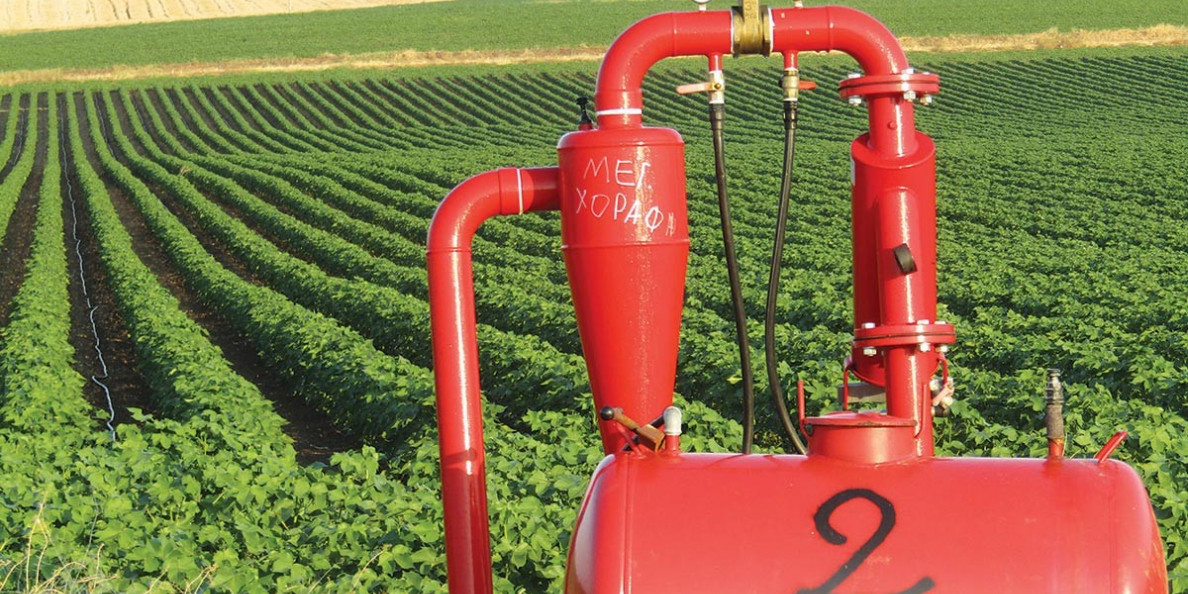
Ypaithros.gr (Dr. Mohamed Ntaraouse, Leader Farmer Hellas): For decades, cotton yields were pushed higher through heavier fertilization, spraying and tillage, a practice especially common in Thessaly's cotton monoculture, but this has degraded soil's physical and biological balance — reducing organic matter, compacting soil, limiting microbial activity and altering pH, ultimately raising input costs while fertility declines. Leader Farmer Hellas has launched two initiatives to address this. The first introduces natural biotechnological products such as UNIKER (living bacteria that build organic matter and improve soil aeration and water retention), UNISTART (bacteria that convert non-assimilable nutrients into plant-available form and reduce crusting and salinity issues), and AMIKSOL combined with SLAVOL (nitrogen-fixing bacteria, amino acids, phytohormones and phosphorus solubilizers applied foliarly to boost fruit-set, leaf area and heat-stress tolerance). The second introduces digital tools — weather stations with soil-moisture sensors that generate irrigation recommendations, camera-equipped digital pest traps that suggest necessary sprays, and portable spectroscopic soil analyzers that generate fertilization recommendations — all connected via mobile devices into an integrated decision-support system aimed at cutting production costs, limiting environmental impact and improving efficiency.
Source: Ypaithros.gr