Espoir Olodo:
Ivory Coast aims to produce 400,000 metric tons of cotton in the 2026/27 season after output fell to 310,398 tons in 2025/26, the second-lowest level in five years.
The industry expects production to reach 600,000 tons by 2030 despite a sharp decline in the number of cotton growers and rising competition from soybeans and cashew nuts.
Poor rainfall during planting and higher input costs linked to Middle East tensions undermined the 2025/26 harvest despite record government subsidies.
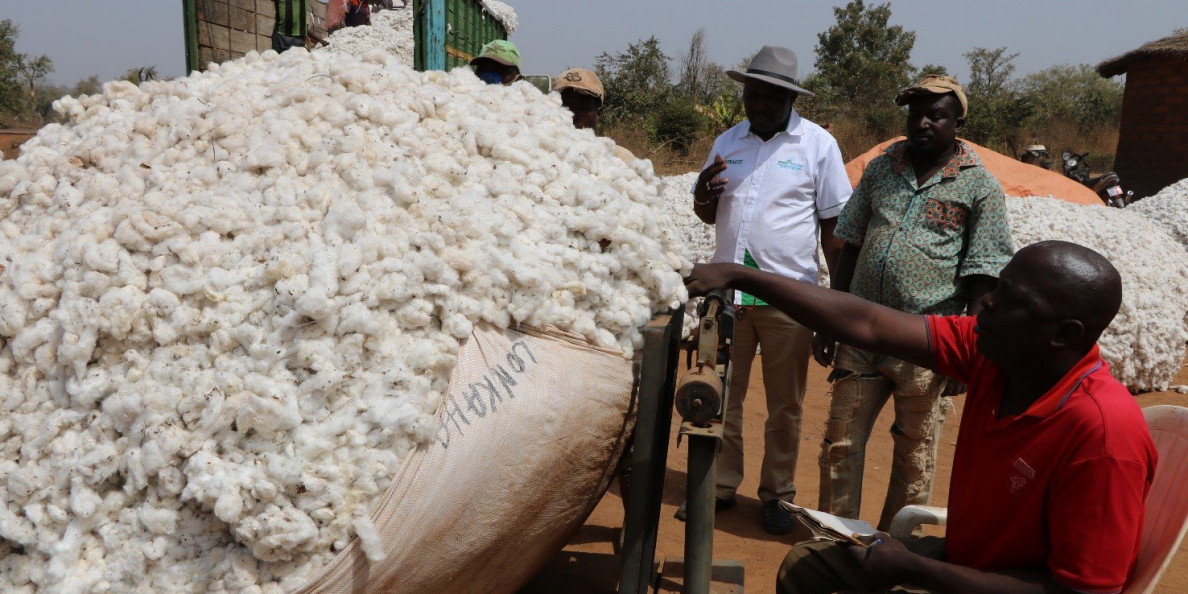
Ivory Coast's cotton industry expects production to recover in the 2026/27 marketing season after two consecutive years of decline, as the country seeks to narrow the gap with regional leaders Benin, Mali and Burkina Faso. On June 24, Brou Kouakou, Executive Director of the Professional Association of Cotton Companies of Côte d'Ivoire (APROCOT-CI), announced a production target of 400,000 metric tons of seed cotton for the 2026/27 season.
If achieved, the target would mark the country's third-best performance since the 2020/21 season and help Ivory Coast regain ground against its main regional competitors. However, industry participants primarily hope to move beyond a disappointing 2025/26 season that fell well short of expectations.
2025/26: A Year of Disappointment
The industry's rebound target highlights the scale of the setback recorded during the 2025/26 campaign, which had initially begun under favorable expectations. After production had already declined by about 10% in 2024/25, the government introduced several measures to revive the sector, particularly among producers concentrated in the country's central and northern regions.
On July 31, then-Agriculture Minister Kobenan Kouassi Adjoumani announced a record CFA25.3 billion ($43.8 million) subsidy package. The government allocated twice as much funding as in the previous campaign. The package included a subsidy of CFA44 CFA per kilogram added to the producer price and an additional CFA18,000 francs per hectare. At the same time, authorities maintained the producer purchase price at CFA310 CFA francs per kilogram.
Following those measures, APROCOT-CI targeted production of 550,000 tons for the 2025/26 season, a level close to the record 559,266 tons harvested in 2020/21, when Ivory Coast ranked as Africa's second-largest cotton producer behind Benin.
However, the sector failed to meet those expectations. "Low rainfall occurred during the planting period, particularly in June (of the previous season), which, in some areas, compromised proper crop establishment," Brou Kouakou told Reuters. He also said higher production costs, driven by tensions in the Middle East and rising fuel prices, increased the cost of agricultural inputs, particularly fertilizers and pesticides. As a result, production reached only 310,398 tons, the second-lowest output recorded over the past five years after the 280,447 tons harvested during the 2022/23 season.
Meanwhile, the number of cotton producers fell sharply to 79,979 from 99,793, representing a decline of nearly 20% in one year. "The decline in the number of cotton producers reflects farmers' shift toward crops considered more commercially profitable, such as soybeans and cashew nuts," the U.S. Department of Agriculture (USDA) said in an industry report published in early April.
The sector recorded one positive development. According to APROCOT-CI, cotton yields increased to 1.14 tons per hectare during the 2025/26 season from 871 kilograms per hectare in 2024/25. The improvement came despite an 18.7% decline in cultivated area, which fell to 290,208 hectares.
Targeting 2030
Following the difficult season, APROCOT-CI has shifted its focus toward long-term growth. The planting campaign should conclude by the end of June. Although the association has not yet disclosed planned acreage or expected yields for the 2026/27 target, it has outlined ambitious objectives for the coming years. According to Brou Kouakou, the industry expects cotton production to increase gradually and reach 600,000 tons by 2030.
Before then, industry observers will closely monitor the next harvest, which is scheduled to run from October through January, to assess whether the sector can deliver on its recovery plans.
Ivory Coast's cotton industry currently relies on six main companies: Compagnie Ivoirienne pour le Développement du Textile (CIDT), Global Cotton, Ivoire Coton, Compagnie Ivoirienne de Coton (COIC), Société d'Exploitation Cotonnière (SECO-OLAM) and Société Industrielle Cotonnière des Savanes (SICOSA 2.0).
Source: ecofinagency.com