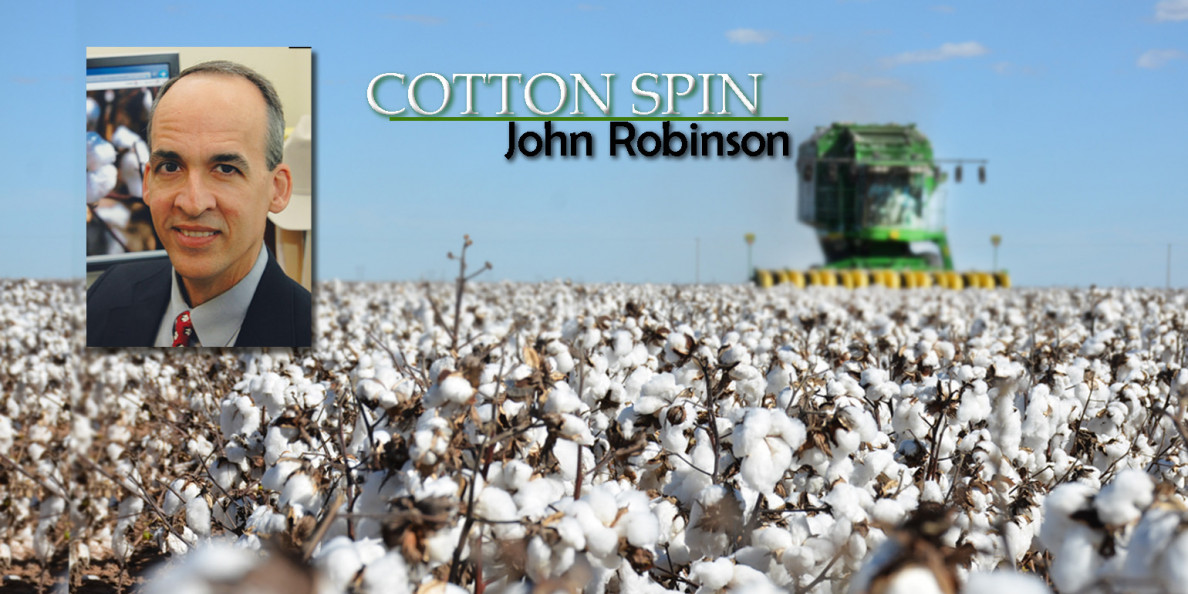
John Robinson, Extension economist, cotton marketing, Texas
To review, the El Niño-Southern Oscillation (ENSO) is a recurring and/or alternating global climate pattern characterized by either warmer-than-normal (El Niño) or colder-than-normal (La Niña) equatorial waters in the eastern Pacific Ocean. These temperature deviations are associated with different weather patterns. In particular, the La Niña condition is associated with warmer/dryer weather in the U.S. Cotton Belt. The National Oceanic and Atmospheric Administration forecasts better-than-even odds for the current La Niña condition to last through February.
In cotton terms, a La Niña condition implies lower soil moisture during preplant and (for South Texas) even early planting. This could lead to higher-than-average levels of abandonment, particularly in dryland regions.
But it is more complicated than that. NOAA forecasts a switch to ENSO-neutral, or “normal” weather, from March through midsummer. And just to keep it interesting, NOAA also forecasts rising odds this summer of an El Niño condition, which is associated with cooler/wetter weather.
The possible switches in weather influences create a complicated situation and raise several questions. Perhaps the biggest question is whether “normal” weather during the growing season will make up for La Niña dryness in the preplant season, particularly in the drier parts of the Cotton Belt.
Then there are the combinations of different levels of planted acreage with changing weather influences. For example, what if dry conditions result in more cotton planting in the Southern Plains region (a common phenomenon) and then there are timely rains, including in August and early September? I mean to imply there is the possibility of higher-than-expected production, which is bearish in the aggregate.
Whatever the U.S. production level, when the market figures it out (probably before summer is over) prices will probably weaken. That is the nature of weather markets in the absence of improving demand.
For additional thoughts on these and other cotton marketing topics, please visit my weekly on-line newsletter at cottonmarketing.tamu.edu.