Vijay C Roy vijay.roy@livemint.com - NEW DELHI livemint.com
India, which accounts for a quarter of global cotton production, is turning away from the major cash crop in favour of rice and maize, as farmers shift to alternatives offering more stable yields and better returns.
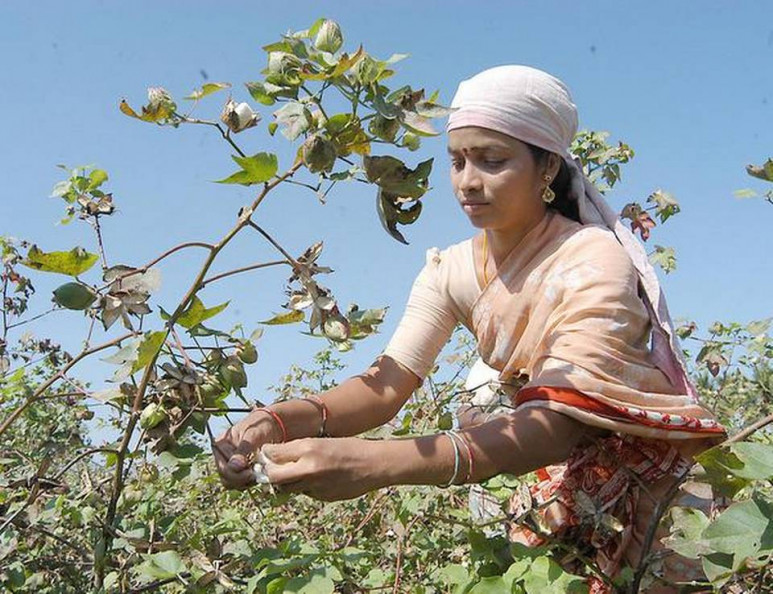
With cotton productivity remaining volatile due to challenges including erratic weather and pest attacks, the country’s area under cotton has fallen by nearly a fifth to 11.2 million hectares in 2025-26 from 13.4 million hectares in 2019-20, according to the latest government data. Cotton supports around six million farmers in India.
Rice and maize acreages have expanded by 18.7% and 64.7% to 51.82 million hectares and 15.76 million hectares, respectively, in 2025-26 from 2019-20 levels, particularly in parts of northern, central and southern India. This shift assumes significance as the country’s declining cotton area and production threatens India’s textile industry, farmer incomes, rural livelihoods and export competitiveness. It also mirrors deeper structural issues in the agriculture sector that accounts for around 16% of India’s gross domestic product (GDP), with nearly 46% of the country’s workforce dependent on agriculture.
"India’s cotton production has remained largely stagnant in recent years, weighed down by technological stagnation, pest resistance, and structural bottlenecks that have eroded farm profitability and discouraged acreage expansion," said Ajai Rana, chairman, Federation of Seed Industry of India (FSII), an association of researchdriven seed companies in India.
To address the challenges of stagnant productivity, Union budget 2025-26 announced a five-year Cotton Mission and allocated ₹500 crore to increase cotton productivity, especially extra-long staple varieties. Under this mission, farmers will receive technology support.
An email query sent to the agriculture ministry remained unanswered.
“India’s cotton sector is entering a phase where future acreage decisions will be shaped increasingly by relative profitability rather than just agronomic suitability,” said Rakesh Arrawatia, professor at the Institute of Rural Management Anand.
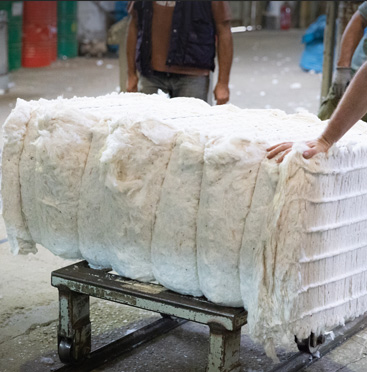
According to projections from agencies such as USDA-FAS, the Cotton Association of India (CAI), and the government, area under cotton is likely to remain at 11.2-11.8 million hectares and production at 30-32 million bales in 2025-26. One bale equals 170 kg.
Also, with average yields of just 430450 kg per hectare, India lags significantly behind leading cotton-producing nations. Countries such as Australia and China report yields in the range of 1,800-2,200 kg per hectare and 1,800-2,000 kg per hectare, respectively—nearly four times higher than India’s output per unit area.
Brazil records yields of 1,700-1,900 kg per hectare, while Turkey achieves 1,500-1,700 kg per hectare. Even the United States, with relatively lower yields among advanced producers, manages 900-1,000 kg per hectare, more than double India’s levels. Pakistan, often compared with India due to similar agro-climatic conditions, reports yields of 700-800 kg per hectare, still well above India’s average.
“If productivity gaps are not addressed through timely technology upgrades, improved pest management and access to better seed systems, cotton is likely to continue ceding ground to crops such as maize and rice that offer more stable returns and policy backing,” Arrawatia said.
Globally, the average cotton yield stands at around 750-800 kg per hectare, placing India far below the international benchmark despite being one of the largest cotton-growing countries by area.
As a result, cotton area is declining and farmers are shifting to other remunerative crops. The most significant shift has been toward maize due to strong demand from the ethanol blending programme and the livestock feed industry. Similarly, in northern states, a noticeable shift toward paddy has been observed.
"India is still largely dependent on Bollgard-ii cotton, while countries like Brazil have moved ahead to Bollgard-vi—this technology gap is directly hurting farmer productivity and profitability, as a result farmers are inclined to crops which promise assured income such as rice and maize,” said Bhagwan Bansal, president, Punjab Ginners Association.
Source: livemint.com