
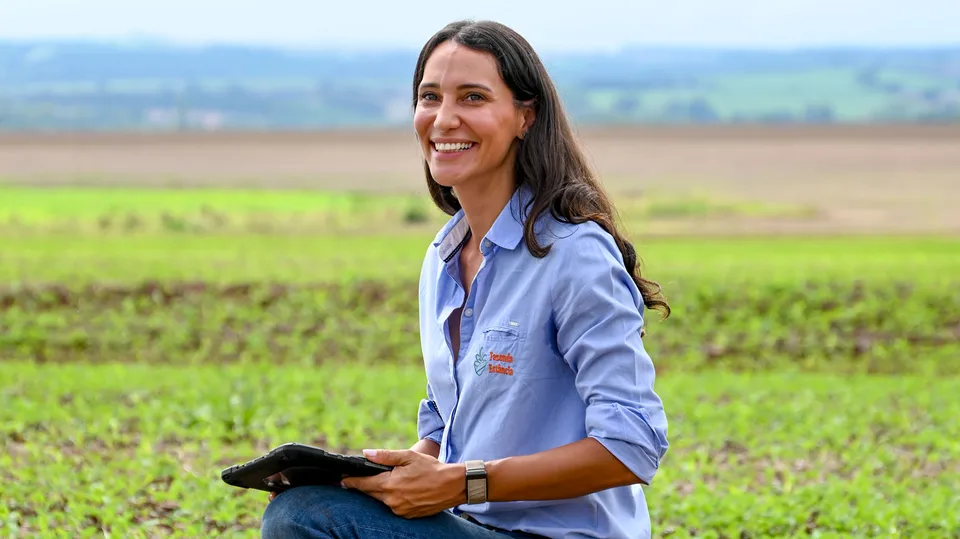
As the next generation of Brazil’s farmers moves into leadership, the technology and drive that propelled the country’s agricultural growth is catching another gear. The run-up today focuses not only on crop production, but also on alternative fuel and regenerative practices, such as those used on Estancia Farm in Pirassununga, Sao Paulo, by second-generation farmer Aline Vick and her family.
Pam Caraway,Executive Editor,Farm Futures
In the mid-1970s, Brazil couldn’t feed itself. Today, the country grows enough grain to help feed the world. Enough, in fact, to challenge the U.S. on the global corn and soybean market.
Look at the numbers for Brazil’s production — and for many U.S. farmers, the focus is on the corn and soybean crops — and the story is tremendous production increases. Some attribute the production increases to large farmers who destroyed rainforests. And their conclusion is that farmers in Brazil are laughing all the way to the bank. Generally speaking, that is not so.
Those who take a closer look at the data behind the final crop numbers and break pão de queijo (you know, cheese bread) with a couple of farmers quickly figure out that Brazil’s road to agricultural prosperity is a bumpy trek through potholes. (You know, like those U.S. farmers travel.)
Let’s start with a look at where increased production in Brazil came from over the past 20 years, a period when rainforest protection moved to the forefront.
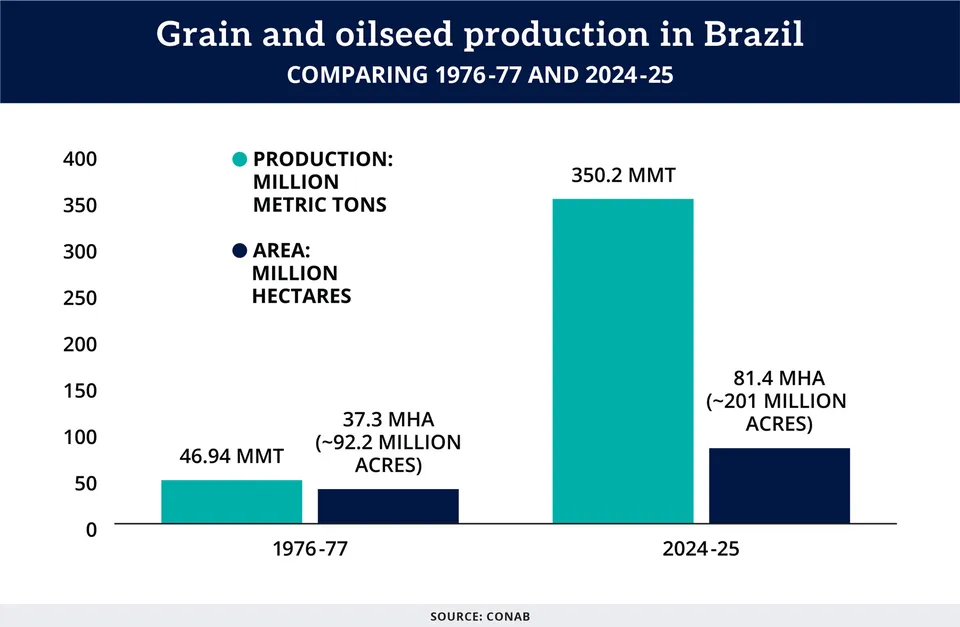
Only about 20% of that growth came from bringing more land into production, said Andy Duff, Rabobank global strategist. The remaining 80% of growth came from double-cropping some of that land and from increasing yields over those decades.
“The impact of research in double cropping, in improved varieties, in improved farming techniques, has meant that you get an almost 400% increase in production with just a 20% increase in the actual land planted,” Duff explained. “And that speaks to me about intensification of use and a corresponding reduction in costs, and the sort of long-term benefits of the research effort that goes into agricultural techniques, new seed varieties, that kind of thing.”
Here are three lessons the world can learn from Brazilian agriculture.
Lesson 1. Bigger isn’t better
While Brazil is known for its large farms and vast spaces, the next generation of farmers appears more focused on efficiency and sustainability.
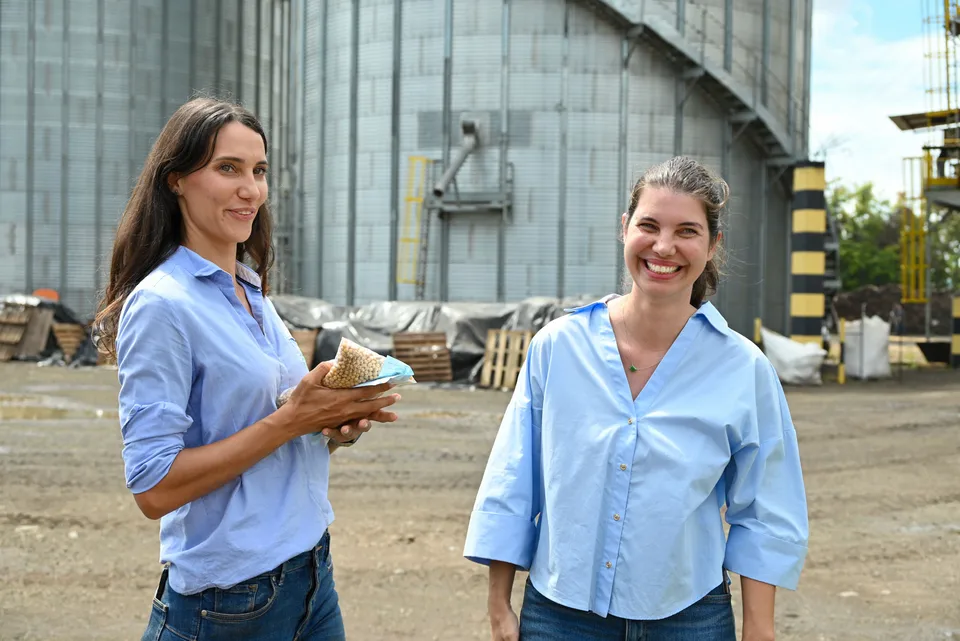
Aline Vick, Estancia Farm in Sao Paulo, was an economist prior to joining the family farm five years ago. When asked about expanding, Vick said that was her father’s focus. She is focused on producing bigger crops on fewer acres.
“I, myself, do not want to buy any more farms,” she said.
Lesson 2. Do your own research
Brazil’s research effort was boosted in 1973 when the Brazilian Agricultural Research Corp. (Embrapa), a public institution, was created with a mission to increase production and climate resilience. Some of what Embrapa did was build on technology available from other countries, including the U.S. The essential element was — and is — providing science adapted to Brazil’s environment, climate, soils and management. That’s another lesson: Conduct research focused on global market needs and production efficiency.
And that work continues, with sugarcane research at Centro de Tecnologia Canavieira now focused on further reducing the plant’s carbon footprint, a data point that gives sugarcane from Brazil and production that involves that sugarcane an edge on the global market. Sugarcane-based ethanol, as well as fuel alternatives produced using second-crop corn, or safrinha, receive low carbon-intensity scores, a significant selling point.
“We’re putting sugarcane at the same level of technological development as corn and soybeans,” said Daniel Medeiros, CTC strategic planning executive.
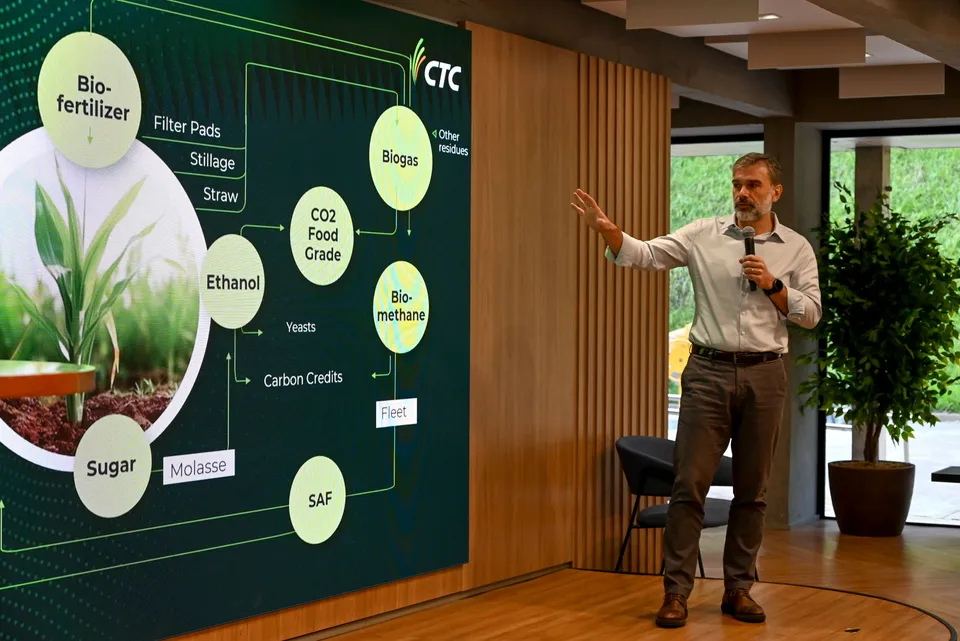
CTC is creating GMO varieties of sugarcane, as well, first releasing stem borer resistance traits in 2017 and now moving to glyphosate tolerance, with release expected within a year. The third generation of GMO varieties will provide weevil resistance.
That leads to a market position that is uniquely Brazilian, at least in this stage of global agricultural diplomacy and policy: Complete disregard of those who demand certain ag practices in the name of sustainability, and reject GMO crops. Those positions, Brazilian leaders said, are outdated.
Lesson 3. Find your swagger
“For 70 years, we were not competitive,” said Ingo Ploger, international president of the Business Council of Latin America. Now, he told a news editor from the European Union, “You cannot compete with us.”
Ultimately, Ploger said, the Green Deal in the EU is a “mistake that will hurt Europe very harsh.”
Competition, Ploger said, “is the name of the game.” To compete globally, he said, “Europe has to reinvent themselves. You have to understand the concept in Europe is not the rule of the world.”
Essentially, he said, Brazil has carved a path to sustainable production at levels above other countries. In return, Brazil expects a level playing field.
Ploger spoke in response to EU policy: “Some of the rules [in the Green Deal] are not rules for sustainability. … Let’s be fair. They are designed to protect domestic production.”
And he explained Brazil’s Economic Reciprocity Law this way: “When a country makes a rule that impedes investment, then we make the same rule.”
And that’s the third lesson, courtesy of Ploger: “Be self-confident.”