On February 28, war broke out between Israel and Iran, with several senior Iranian leaders reportedly killed in a short period of time. The conflict has continued to escalate, triggering a surge in global risk aversion. Crude oil, gold, currencies, and equity markets have all experienced heightened volatility, while energy and chemical markets face potential supply disruption risks.
Iran's announcement of the closure of the Strait of Hormuz has raised concerns over global trade. The Strait carries nearly one-third of global seaborne crude oil trade, and any disruption would directly affect crude supply and upstream costs for chemical fibers and textile raw materials. For textile and apparel trade, Asian exports to Europe and the U.S. could reroute via the Cape of Good Hope, but this would result in higher freight costs and longer transit times, affecting procurement and order placement. If the conflict is resolved quickly, the overall impact may remain limited; however, a prolonged war would gradually amplify disruptions.
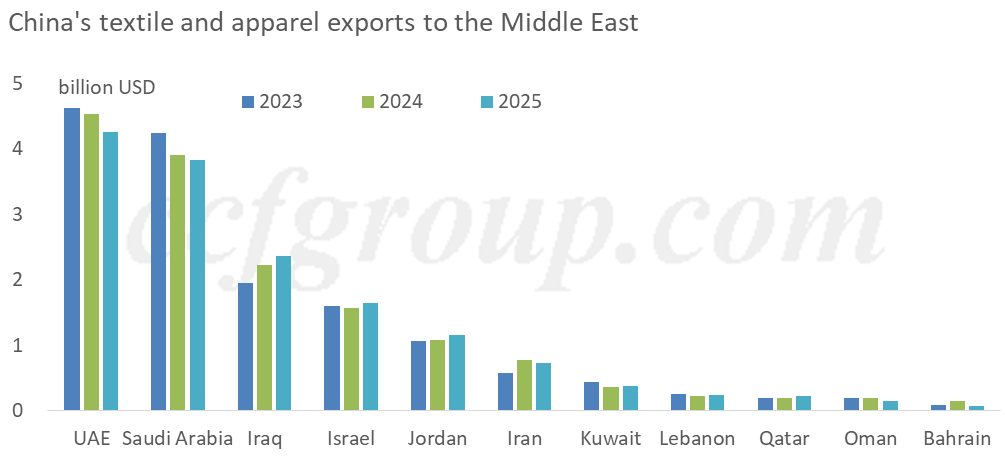
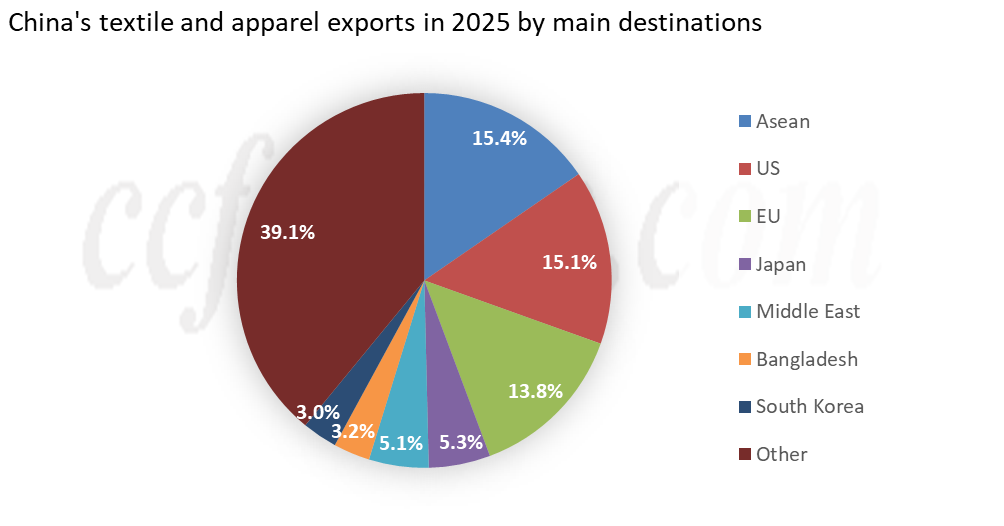
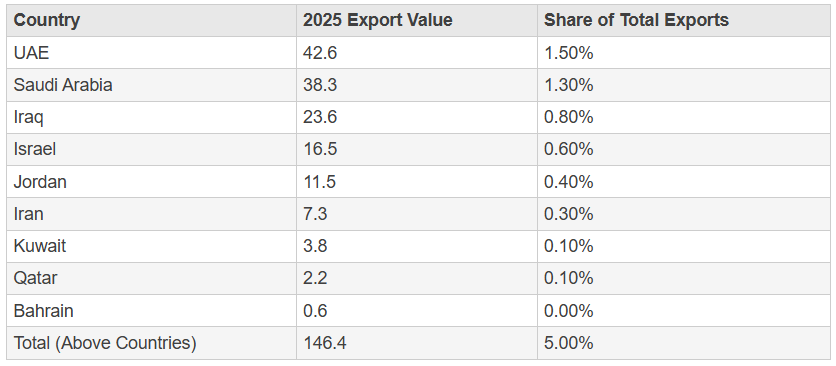
For China, textile and apparel exports to the Middle East account for around 5% of total exports, with limited fluctuations in recent years. The 11 major Middle Eastern countries mentioned represent export values of approximately USD 15.0–15.2 billion, slightly above 5% of China's total textile and apparel exports. The largest shares go to the UAE and Saudi Arabia, followed by Iraq and Israel, then Jordan and Iran, while other countries account for relatively smaller proportions.
2025 China textile & apparel exports to major Middle East countries (Value & Share)
Unit: USD 100 million
At present, tensions between Israel and Iran remain high. In the short term, trade with parts of the Middle East-particularly directly affected regions-may face disruptions. Close monitoring of the situation is necessary. If the conflict broadens and begins to materially affect global supply and demand, China's textile and apparel exports would likely face increasing pressure.
Source: ccfgroup.com