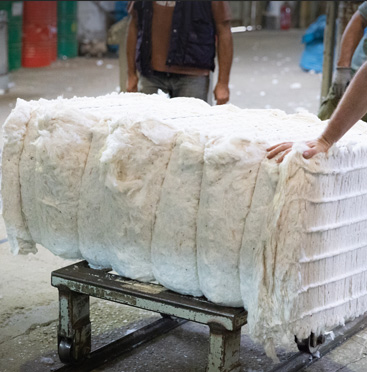
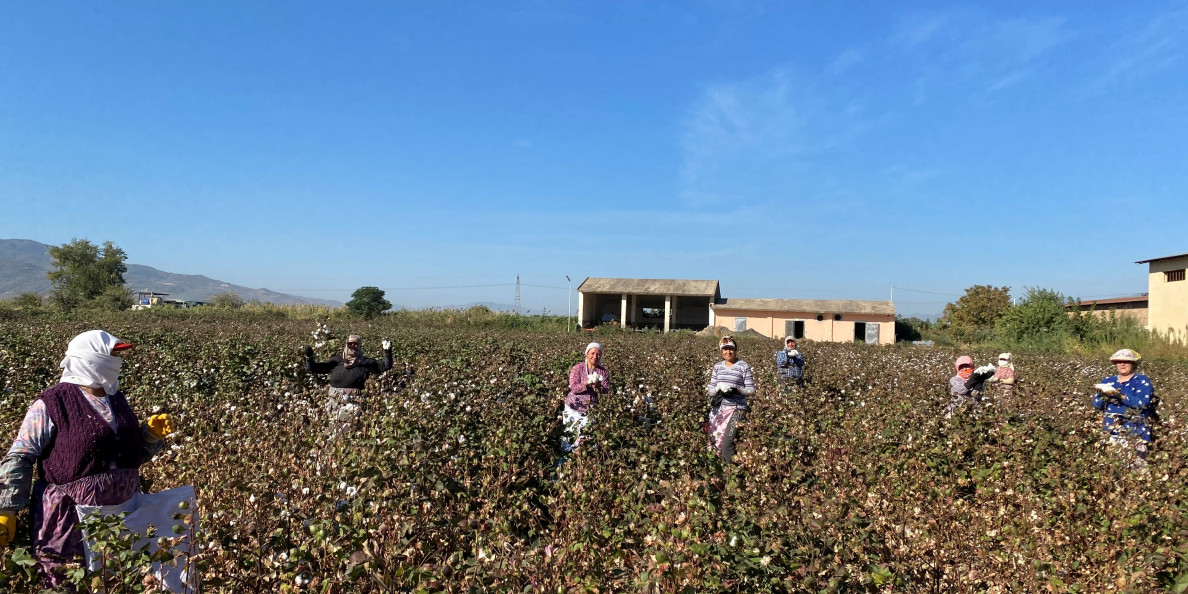
Türkiye, one of the few countries producing GMO free cotton alongside Greece and Spain, has successfully branded this unique position globally through the sustainable cotton initiative “GMO-Free Turkish Cotton,” launched by the İzmir Commodity Exchange and the National Cotton Council. Now, Türkiye is preparing to take the global stage with CRISPR/Cas9 genetically enhanced cotton featuring increased fiber length and strength.
In an interview with TRT Haber reporter İlyas Umut Özacar, Beyza Aydın, R&D lead at the Transgenic Cell Technologies Application and Research Center (TRGENMER), noted that genetic motifs which plants would naturally develop over a thousand years can now be achieved in just a few years in the laboratory. Aydın stated that they experienced hundreds of unsuccessful trials over the approximately three-year experimental period, adding, “Following these, we believe we have now achieved a successful outcome.”
Dr. Cihan Taştan, one of the project coordinators, a faculty member in the Department of Molecular Biology and Genetics at Üsküdar University, and Director of TRGENMER, emphasized that the fiber length of domestic cotton is currently about 10% shorter than international benchmarks, and underlined that their goal goes far beyond closing this gap.
Referring to their work on cotton seeds in plant research, Taştan stated that they designed the process specifically to extend fiber length and increase fiber strength. “In this way, we have now cultivated genetically enhanced cotton with improved fiber length and strength. Based on our fiber results, our goal is to produce fibers that are approximately 30% to 40% longer than those of domestic seeds,” he said.
High value-added export potential worth millions of dollars expected within five years
Dr. Cihan Taştan argued that a 15–20% improvement in fiber quality would enable Turkish cotton to compete with the world’s highest-quality cottons, such as U.S. Pima and Egyptian Giza.
The project, tested according to international standards, evaluated not only cotton fibers but also yarn and fabric performance. It is expected to generate millions of dollars in high value-added export potential within five years and contribute billions of Turkish lira to the national economy in the long term.
Despite being among the world’s largest cotton producers, Türkiye imports approximately 1.1 million tons of cotton annually due to its need for high-quality raw materials, while exports remain at around 40,000 tons. This project by Turkish scientists is seen as a strategic move to reduce import dependency.
“We will also develop colored cotton seeds using the same approach”
Dr. Cihan Taştan stated that, instead of using chemical and toxic dyes in the textile industry, they will develop colored cotton seeds using the same genetic engineering approaches: “In this way, we will be able to use cotton fibers in the textile industry without dyeing them. With our plant biotechnology R&D and accumulated expertise, we will develop domestic seeds required for many different textile products, increase their efficiency, and become competitive with international markets in the textile industry.”
Could this project overshadow GMO-Free Turkish cotton?
While CRISPR-based gene editing is a powerful tool for improving plants, it also brings significant biosafety concerns that must be carefully addressed. Due to the potential emergence of unintended outcomes such as allergens or contaminants, strict biosafety assessments are required to ensure that genetically modified plants are safe for human use/consumption and for the environment. In this context, factors such as gene flow to wild or non-target plants, potential ecological effects on non-target organisms, and impacts on beneficial insects must be examined. Understanding the potential impact on the ecosystem can help develop risk management strategies and mitigate unintended environmental consequences.
Furthermore, environmental monitoring after genetically modified plants are introduced to the market is of critical importance. This process involves the systematic and continuous observation of modified plants in the environment. Such monitoring, conducted in line with scientific hypotheses, enables the proactive identification and management of potential environmental risks.
Cotton, a water- and chemical-intensive raw material, may fall short of sustainability criteria regardless of whether it is GMO or non-GMO. Beyond the labels used to emphasize sustainability, it is the production processes and their impacts on human health and the environment that truly matter.
Better Cotton, a production standard aimed at achieving environmentally, socially, and economically sustainable cotton production, is based on six core principles covering criteria ranging from pesticide use and soil health to water consumption and working conditions of laborers in cotton production. Farmers who produce in accordance with these criteria are referred to as “Better Cotton farmers,” and the cotton they produce is called Better Cotton-licensed cotton.
Source: textilegence.com