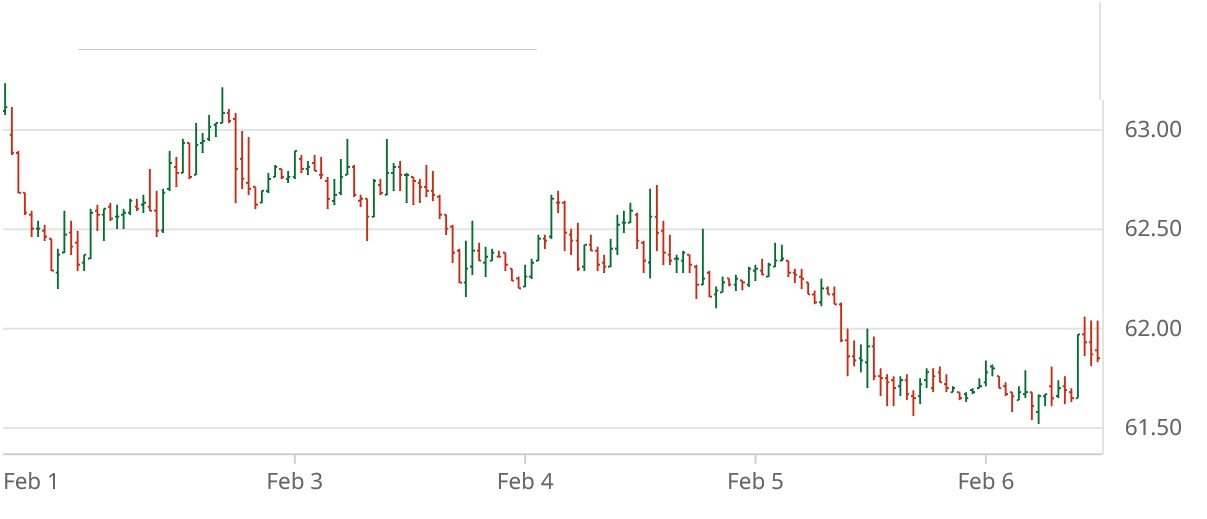
Through Friday, February 6, ICE cotton futures slid to life of contract lows (see chart above courtesy of Barchart.com). The nearby March’26 contract settled Friday at 61.06 cents per pound, down 70 points on the day. The new crop Dec’26 settled the week at 67.60 cents per pound. Chinese cotton prices were mixed this week, as was the A-Index of world cotton prices.
Other ag futures markets tracked different patterns across the week. CBOT corn followed a gentle up-trend while soybeans started flat, shifted higher, then continued with a gradual climb. KC wheat followed a sideways gyration. ICE WTI crude oil futures bottomed early before gyrating into a slight uptrend across the week. U.S. Dollar Index strengthened across the week. Other macro influences (i.e., GDP, inflation, and interest rate policy) remained mixed in their expectation and implication for slow economic growth.
Cotton-focused news included unspectacular U.S. export sales for the week ending January 29, down from recent weeks’ marketing year highs. Reported demand indicators included inactive to active spot trading, depending on the region, as well as light to moderate demand. The supply question is almost resolved for the 2025 crop. As of January 15, NASS forecasted ginning of 94% of forecasted production being ginned. As of February 5, USDSA AMS counted 97% of forecasted U.S. production as having been classed.
Through Thursday, February 5, cotton open interest mostly increased across the week. Some of this can be explained by continued short speculative positioning. Although there were over 5,000 new hedge fund longs added week over week, this was outpaced by 6,821 added hedge fund shorts as well as 1,929 contract shrinkage in the net long index fund position.
The dynamics of ICE cotton futures may also represent a wet blanket on the market. It remains true that unfixed call sales (representing potential/eventual futures buying by mills) are at an historically low level, perhaps reflecting the cautionary buying on the demand side.
For more details and data on Old Crop and New Crop fundamentals, plus other near term influences, follow these links (or the drop-down menus above) to those sub-pages.
Πηγή: TAMU